
This ROPnet was written by Charlie Bloomer. Charlie is a high school student from Sandy who’s writing ROPnets with us this summer. Are you interested in joining ROP’s volunteer communications team as well? Email emma@rop.org if you have a few hours and want to pitch in! Now on with Charlie’s ROPnet…
Dear ROPnet,
When Oregon Remembrance Project (ORP) founder Taylor Stewart travels to rural parts of Oregon, he likes to play a game he calls “Can I get this random stranger to support the Sunrise Project?”
The Sunrise Project is an initiative for historical reconciliation. It focuses on “sundown towns,” which are communities across the United States that intentionally excluded African-Americans or other racialized groups and created whites-only communities through cultural intimidation or violence, according to ORP’s website.
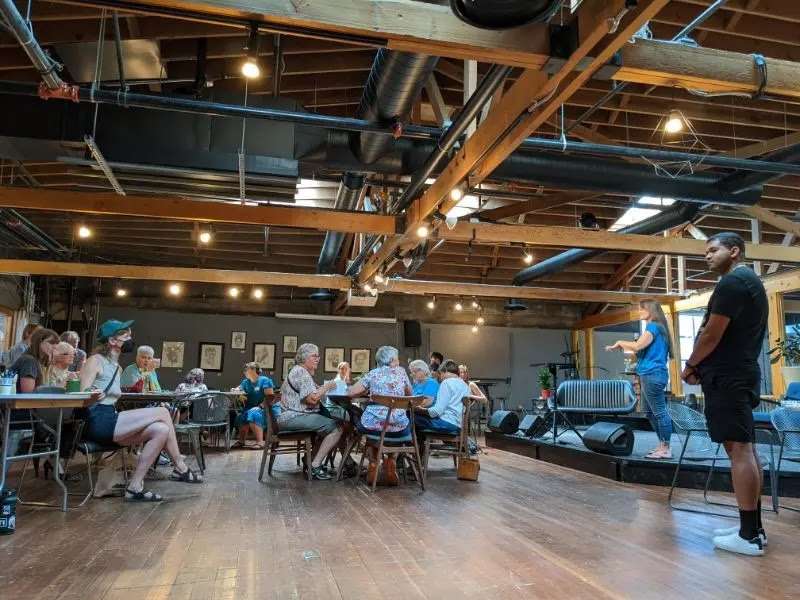
When Stewart approached someone who he described by saying “I’m sure they watch a lot of Fox News,” he made an effort to convey the Sunrise Project in an authentic, yet persuasive, way. He argued it’s important to get different viewpoints for diverse coalition building.
“How can you speak someone’s language without knowing the words they use?” Steward said.
When he first talked to the stranger, the stranger was unaware of what lynching meant; by the end of their conversation, the stranger was enthusiastic to continue to see the work that ORP does.
“To be able to have had that interaction was a really meaningful experience for me,” Stewart said.
Although organizers have different methods for approaching their communities, Stewart makes an effort to connect with all people and bring them into the historical work he does, he said.
“There’s a saying in fundraising of ‘if you don’t make the ask, you are saying no for them,’” Stewart explained. “It’s that same approach to racial justice, where if you don’t make the ask of someone to join you, you are saying no for them. And in that way, you are denying them their capacity to choose justice, which is denying them part of their own humanity.”
ORP and partnering coalitions aim to create authentic relationships with their communities to rectify historical injustice while undoing systems of oppression in the modern day. ORP had an eventful summer through their Sunrise Project Speaker Series, Coos Bay anniversary, and multiple Juneteenth celebrations.
Stewart didn’t always plan on doing historical justice work. On a life-altering trip to Montgomery, Alabama, Stewart was exposed to a documented lynching of an African-American man, Alonzo Tucker in Coos Bay, Oregon. After learning about the event, he was determined to bring awareness to what occurred.
Through the Equal Justice Initiative, he organized a community remembrance project to shed light on the lynching in Coos Bay. This action springboarded into the ORP, whose mission is to reconcile with historical racial injustice.
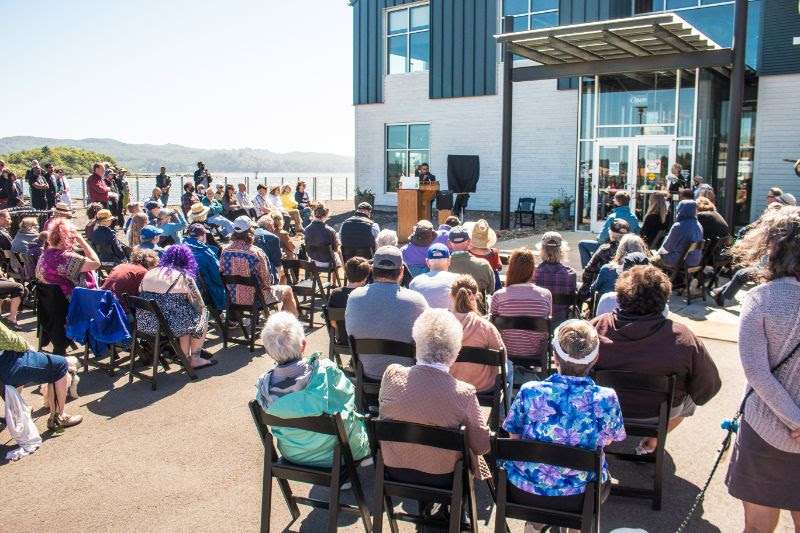
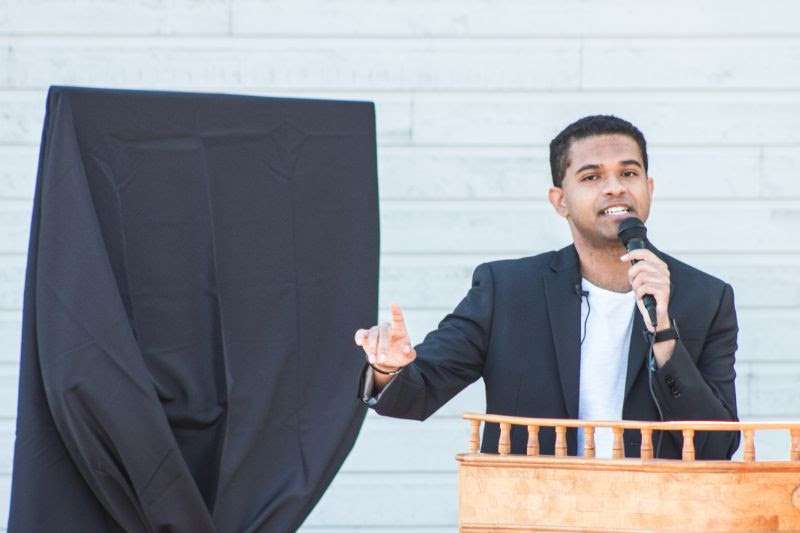
“I started the Oregon Remembrance Project just as this obscure personal side project,” Stewart said. “I tell people I don’t get caught up on questions like how are you going to do that, I just like press on.”
While continuing this emergent process, ORP helped organize the Sunrise Project Speaker Series in Grants Pass and Ashland. The Sunrise Speaker Series follows the work of Sarah Sanderson as she talks about her book “The Place We Make.”
The novel is an investigation of the expulsion of Jacob Vanderpool, the only known African-American to be expelled from Oregon. Sanderson’s work became multifaceted: in her research, she discovered she was a distant relative to a white business owner who pressed charges. She speaks about her personal quest for reconciliation, beyond just bringing awareness to exclusion laws and Jacob Vanderpool’s story.
Gabrielle Johnsen, a Grants Pass Remembrance organizer, was there to witness Sanderson speaking.
“To have somebody walking you through how they interacted with that history is just a good gift,” Johnsen stated.
In addition to the presentations, ORP helped organize three Juneteenths. First, The Oregon City Library hosted an event along with Coos Bay, which has grown to have the largest Juneteenth event per capita in the state of Oregon, Stewart said.
The third Juneteenth was hosted in Grants Pass with the theme “emancipatory spirit of justice.” Black history bingo, signs saying “What does freedom mean to you?”, and food trucks gathered together at Riverside Park.
Standing nearby, a group of counter-protesters held up signs.
The group’s cause was unrelated to Juneteenth, however. The religious group protested abortion, with one member wearing an anti-lgbtq shirt, Johnsen, who helped organize the event, observed.
Advocates in Grants Pass have been familiar with the local group for years. But instead of escalation, Johnsen explained, organizers hoped to connect with them. The two rivaling groups experienced tension throughout the event; the next day, two organizers from each group got brunch together.
Johnsen hopes to avoid creating an “us vs them” narrative in her community organizing.
“The reality is that community is together. That if we’re going to get any of the work done in our, in our country, in our world, in our state, in our cities, we need to do it together,” Johnsen said.
Grants Pass Remembrance also hosted presentations across the state, and hosts their own podcast called the Sunrise Project Podcast.
Stewart traveled again to Coos Bay for the one-hundredth anniversary of the disappearance of an African-American man named Timothy Pettis. There was a walking tour and memorial service on July 6th, 2024, the one-hundredth anniversary of his disappearance to bring justice to his story. A gravestone was donated to memorialize Pettis, which the group also visited.
In the future, ORP is planning to host “sunshine trips,” inviting people of color to visit historical sites like the Timothy Pettis and Alonzo Tucker memorials.
“We live in a beautiful state but so much of that beauty feels inaccessible to communities of color,” Stewart said. “Wanting to use these sunshine trips as one way to feel like we’re opening up Oregon, that people feel… they can experience the richness that exists in communities across the state.”
On reflecting on their work, ORP members continue to try to make rural pockets of Oregon more aware.
“The beauty of this is that it really is just ordinary people coming together to try to do something extraordinary,” Stewart said.
While organizers hope to avoid catering, accepting, or agreeing with others at the expense of marginalized groups, they see connecting with their local rural communities as a way forward, Johnsen explained.
“Connecting gives that possibility, even if it’s not very likely, it still opens up that hope.” Johnsen said. “One of the basic things for me is that belief we can always change, that other people can change, that our world can change.”
Warmly,
Charlie and the ROP team
